
.png)
Universities in Granada: Your guide to studying and living in the city
Picking a university is never just an academic decision. It's also a decision about the city you'll wake up in for the next few years, the friends you'll make, and the kind of student you'll become. Granada, home to one of Spain's oldest and most respected universities, is consistently one of the top choices for local and international students alike: compact enough to feel like home within a few weeks, lively enough that you'll never run out of things to do. This guide walks you through what studying in Granada actually looks like, how it compares to bigger alternatives like Madrid, and what to sort out before you arrive. From choosing the right program to finding a comfortable place to live.
Why choose Granada for your studies?
Granada packs centuries of history. The Alhambra, the Albaicín's winding streets, the legacy of Al-Andalus, into a city that still runs on student energy: cheap tapas bars, packed university squares, and a social calendar built around the academic year. Compared to Madrid or Barcelona, the cost of living is notably lower, which matters when you're budgeting a whole semester or year abroad. It's also a genuinely welcoming place for international students: roughly 8% of undergraduates and 23% of postgraduates at the University of Granada come from abroad, and the university holds exchange agreements with institutions in 85 countries. Making it one of the most popular destinations for European exchange students. Its walkable size means you can get from lectures to your favourite park to your flat without ever needing public transport, which goes a long way toward actually feeling settled.
Top universities in Granada for international students
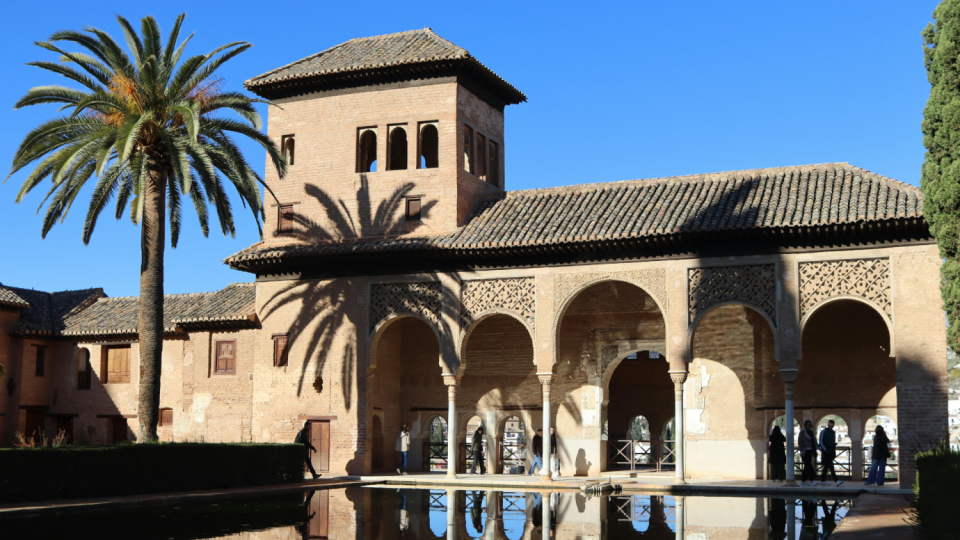
Unlike bigger cities with several competing institutions, Granada's academic life revolves almost entirely around one name: the University of Granada (UGR). With more than 55,000 undergraduate and postgraduate students, it ranks among the world's top 301–400 universities (2025 Shanghai Academic Ranking) and is the highest-ranked university in southern Spain. It offers over 70 bachelor's degrees, 150+ master's programs, and 28 doctoral programs. Undergraduate teaching is mostly in Spanish, while master's programs increasingly come in English, particularly in international relations, engineering and business. UGR is also known for specific academic strengths: medicine and biomedical research, one of Spain's most respected Faculties of Translation and Interpreting, and — reflecting Granada's Moorish history. A well-established School of Arabic Studies. International students get access to mentoring programs, disability services, accommodation assistance and a dedicated international relations office at each faculty.
Since choosing 'a university in Granada' in practice means choosing the right UGR faculty and programme, our complete Study in Granada guide goes deeper into specific programmes, rankings and admissions if you want the full picture.
Studying in Granada: What to expect
Spain generally follows a two-semester academic year (roughly October–January and February–June), with the ECTS credit system and a mix of continuous assessment and final exams, attendance and participation often matter more than in some other countries. Most bachelor's teaching happens in Spanish, so many international students combine their degree with courses at the Centro de Lenguas Modernas to build up their Spanish alongside their studies. UGR's mentoring and buddy programs, plus groups like ESN Granada, are the fastest way to find your feet: language exchanges ("intercambios") in particular are a low-pressure way to practice Spanish while making local friends.
For the full academic calendar and step-by-step admissions process, see our Study in Granada guide.
Student accommodation in Granada
.png)
Most students in Granada choose between three main options: a student residence or studio (all-inclusive rent, community spaces, on-site facilities), a shared apartment or piso compartido (cheaper, typically €200–250 per room plus bills, more independence), or a colegio mayor (a more traditional, structured university hall). Popular student neighbourhoods include Realejo, Albaicín, Camino de Ronda and Zaidín-Vergeles, each within easy reach of one of UGR's campuses (Fuentenueva, Cartuja, or the PTS health sciences campus). Because demand peaks hard in September, it's worth starting your search several months in advance, whichever option you choose.
Not sure which type suits you? Our student residence vs shared apartment comparison breaks down the pros and cons of each. Worth knowing: Student Experience Granada is an officially recognized collaborating residence of the University of Granada, which gives UGR students preferential access to its studios and facilities.
Student life and local insights
Granada's social scene runs on ESN Granada's Thursday "Erasmus nights", language exchanges and trips, plus a genuinely legendary tapas culture. Order a drink almost anywhere and a free tapa comes with it, with local favourites like Bodegas Castañeda and Los Diamantes serving generous plates for a few euros. Nightlife tends to run late (until 5–6am Thursday to Saturday), especially around Pedro Antonio de Alarcón, and flamenco shows in the Sacromonte caves are a rite of passage. On a budget, the Alhambra offers student discounts, the Albaicín is free to wander, and Sierra Nevada is within easy reach for a weekend hike. As an official ESN Granada partner, Student Experience Granada also offers ESNcard holders extra perks like a discount on monthly rent — a small but useful bonus if you're already planning to get involved with ESN.
For a full monthly budget breakdown, see our cost of living in Granada guide.
.png)
Frequently asked questions about universities in Granada
Which are the best universities in Granada for international students?
What is student life like in Granada?
How do I apply to universities in Granada as an international student?
Is it easy to find student accommodation in Granada?
What are the main differences between universities in Granada and Madrid?
| Granada | Madrid | |
| Monthly student budget (all-in) | ~€650–950 | ~€870–1,500 |
| Vibe | Compact, historic college-town feel; everything walkable | Big, cosmopolitan capital city |
| Main university | University of Granada (UGR) 55,000+ students, top-ranked in southern Spain | Over a dozen universities, very large international mix |
| Best known for | Medicine, sciences, translation & interpreting, Arabic & Islamic studies heritage | Wider range of English-taught programs, business & finance, bigger networking scene |
Next steps: How to get started with your student experience in Granada
Start by narrowing down your faculty and program (checking which master's are taught in English if that matters to you), then sort your application paperwork early — especially your visa and NIE/TIE if you're coming from outside the EU. In parallel, start exploring housing well before September, since the best studios and residences go quickly, and make a point of getting involved with ESN Granada or your faculty's student groups from day one. That's where most lasting friendships (and the best local tips) actually come from.
Ready to look at housing? Explore student housing options in Granada or book a (virtual) tour of Student Experience Granada.
What students say about Student Experience Granada
.jpg)
"I felt at home right away. Everything here is designed with students in mind." - Paloma, resident of Student Experience Grananda
.jpg)


